There are places in the world that aren’t merely destinations on a map, but gateways into story-rich landscapes where time seems to fold in on itself, places where every street corner whispers tales of empire and conquest, of art born from adversity, of cultures interwoven like the threads of an ancient tapestry. In the sun-drenched heart of southern Spain, within the soul-stirring region of Andalusia, two such destinations quietly command the imagination: Ronda and Granada.
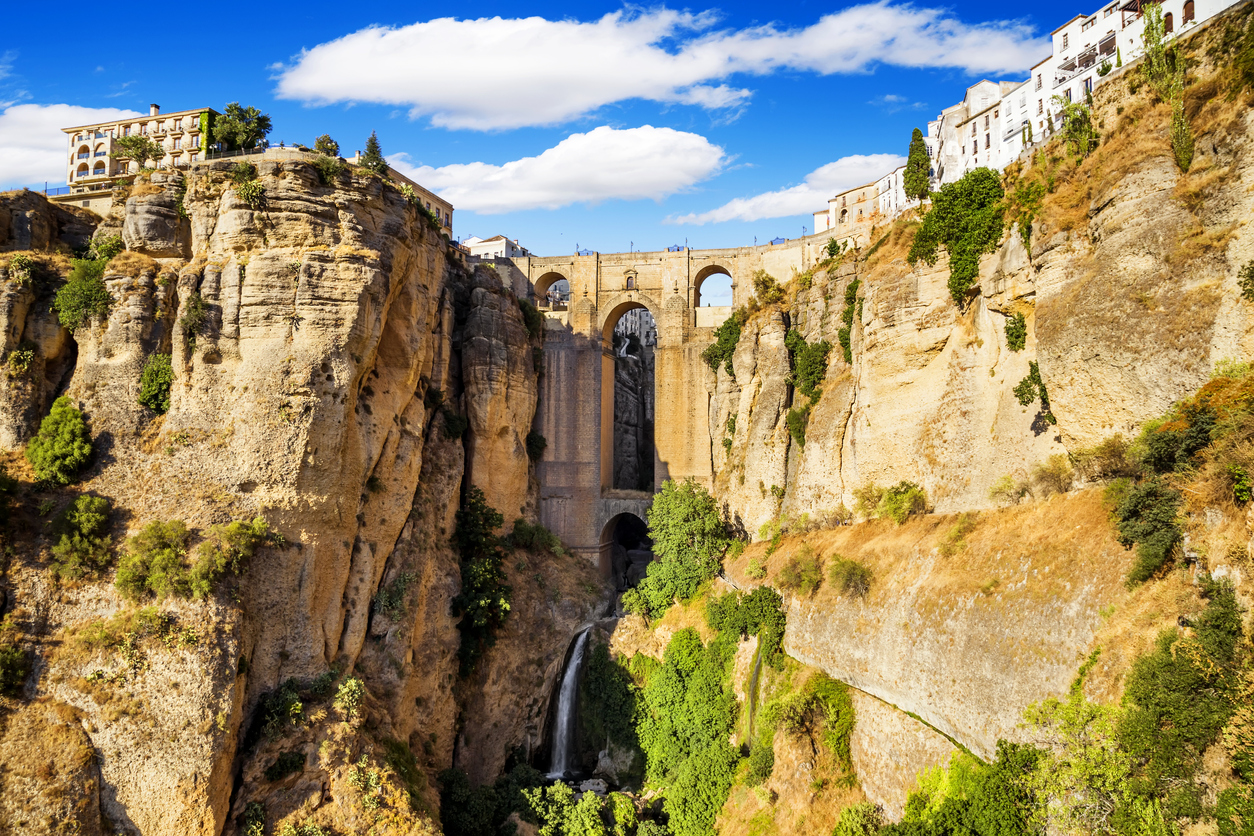
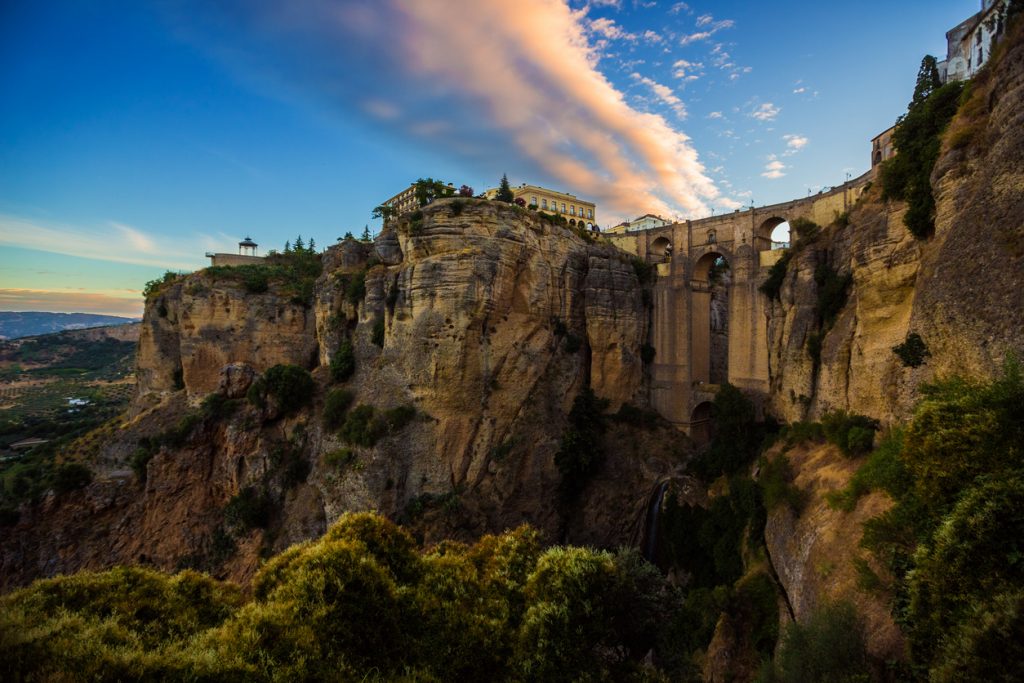
To approach Ronda is to approach drama itself. This historic hill town sits high above the surrounding countryside, poised on the edge of a deep limestone gorge carved over millennia by the Guadalevín River. From the moment you arrive, it feels less like a settlement that was planned and more like one that emerged organically from the rock itself. Whitewashed houses cling to the cliffs, stone walls trace ancient defensive lines, and the landscape drops away so suddenly that it still manages to take even the most seasoned traveller by surprise.
Ronda’s story has always been shaped by its geography. Long before modern Spain took form, this strategic mountain stronghold was settled by Celts, shaped by Roman engineers, and later refined by Moorish rulers who understood the power of position as well as beauty. That layered past remains etched into the fabric of the town, not as a museum piece but as something lived-in and quietly present.
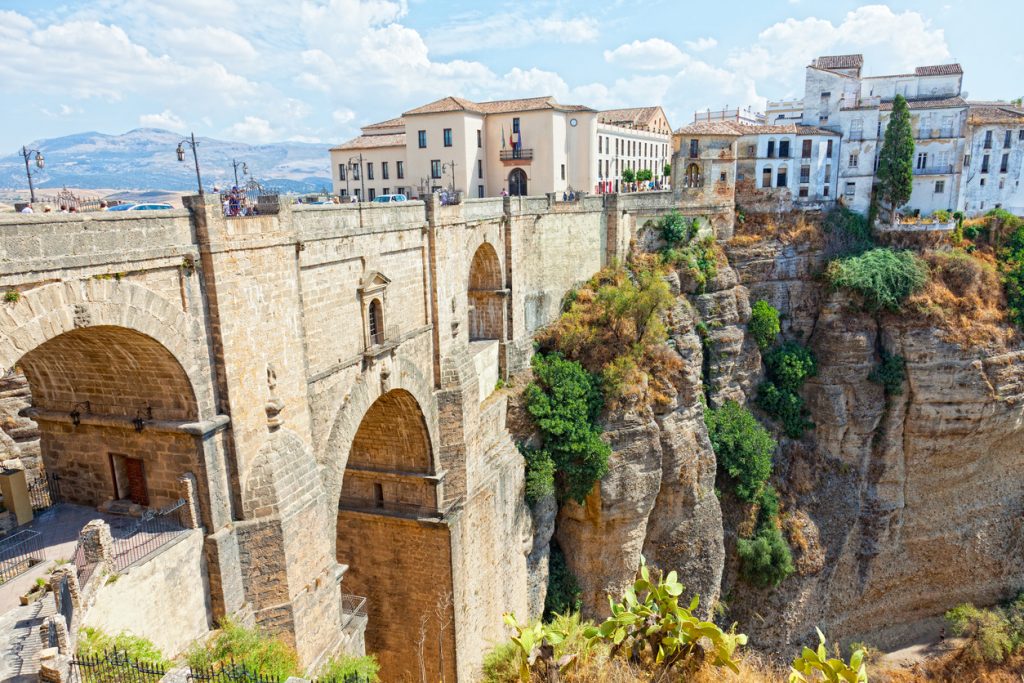
The defining image of Ronda is, of course, the Puente Nuevo. Spanning the gorge at a vertiginous height, this monumental 18th-century bridge connects the old Moorish quarter with the newer town. Standing at its centre, looking down into the sheer void below, you feel suspended between centuries as much as between two sides of the ravine. It is a place that invites pause, not for a photograph alone, but for reflection.
Beyond the bridge, Ronda reveals itself slowly. The town’s historic bullring, one of the oldest in Spain, speaks to a complicated cultural heritage, while shaded promenades like the Alameda del Tajo open out onto vast, open views across rolling Andalusian hills. There is a quiet dignity to Ronda, a sense that it has nothing to prove. Life moves at its own pace here, shaped by light, weather, and tradition rather than urgency.
Where Ronda feels suspended above the land, Granada unfolds at its feet. Set against the dramatic backdrop of the Sierra Nevada, this city carries a different kind of gravity, one rooted in cultural convergence, artistic brilliance, and historical consequence. Granada does not whisper its past; it resonates with it.
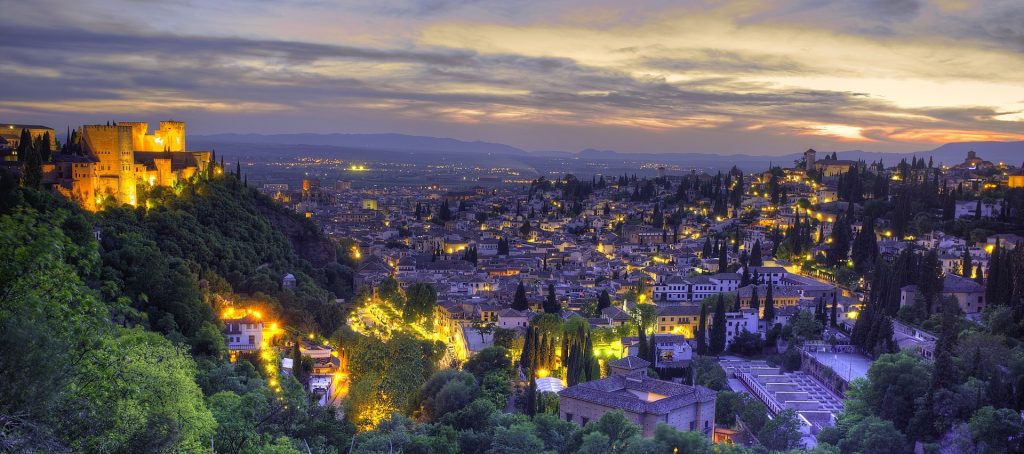
At the heart of Granada rises the Alhambra, a name that alone evokes centuries of fascination. Perched above the city like a watchful presence, this vast palace-fortress complex is among the most extraordinary architectural achievements in Europe. Built by the Nasrid dynasty during the final flowering of Moorish rule in Spain, the Alhambra is a masterclass in proportion, symbolism, and serenity. Its carved stucco walls, geometric tilework, tranquil courtyards, and flowing water channels feel less constructed than composed.
To walk through the Alhambra is to move through light and shadow, silence and sound. At certain moments, particularly as the sun begins to lower, the entire complex seems to glow from within, the warm hues of its walls shifting subtly with the changing sky. It is easy to understand why artists, poets, and travellers have struggled to put its effect into words.
Below the Alhambra lies the Albaicín, Granada’s oldest neighbourhood and one of its most atmospheric. Its steep, winding streets follow the contours of the hill, revealing whitewashed houses, hidden squares, and unexpected viewpoints at every turn. From the Mirador de San Nicolás, the Alhambra appears across the valley in full symmetry with the mountains beyond, a view that feels less like a panorama and more like a quiet revelation.
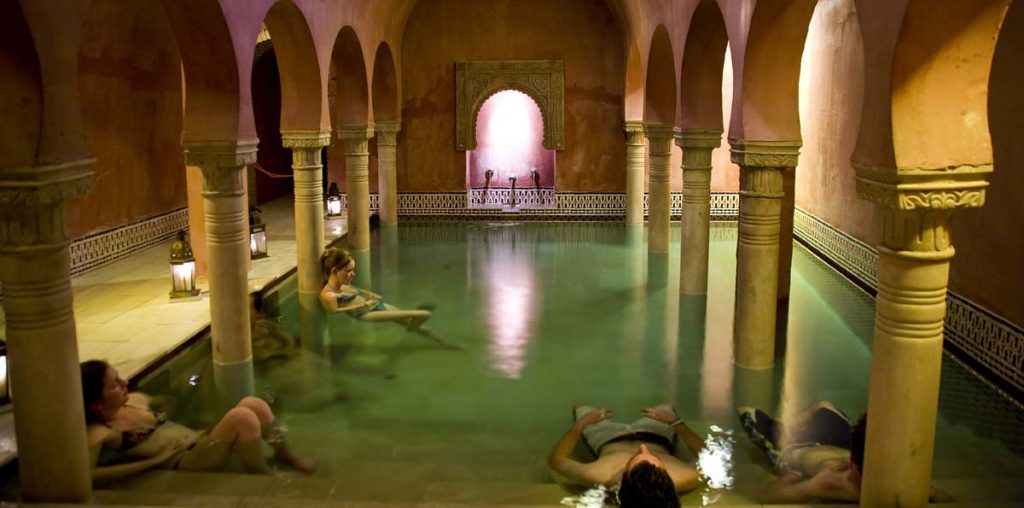
Granada’s richness lies not only in its Islamic heritage but in the way histories overlap rather than replace one another. After the Christian Reconquista, Renaissance palaces, baroque churches, and grand civic buildings rose alongside existing Moorish structures. The result is not architectural confusion, but harmony, a city shaped by continuity as much as conquest.
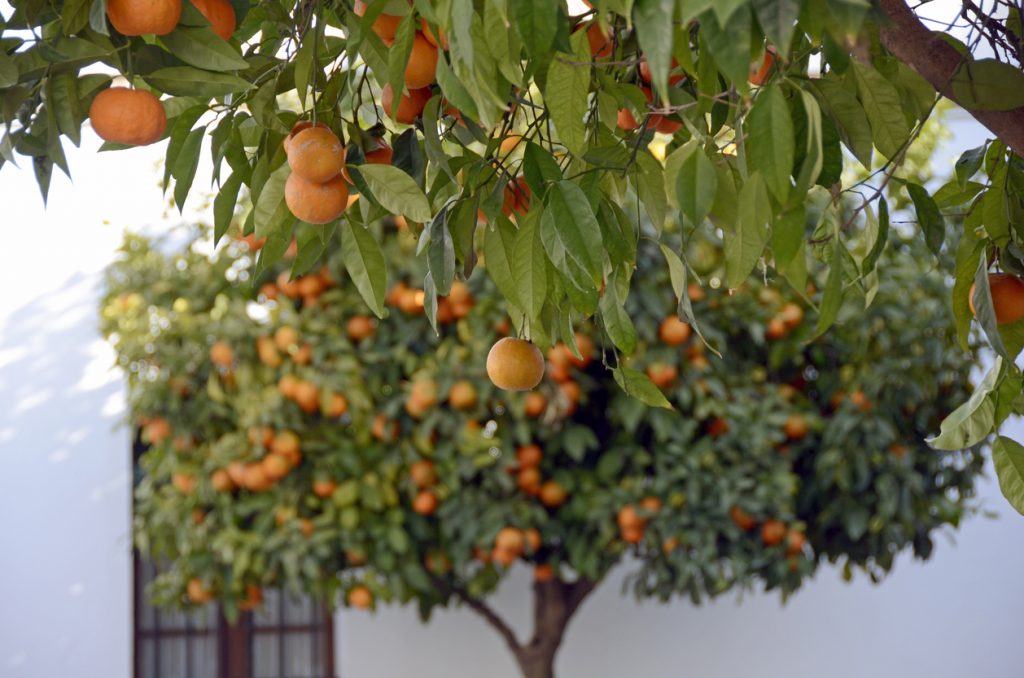
What ultimately connects Ronda and Granada is not scale or status, but atmosphere. In Ronda, the air carries the scent of wild herbs and sun-warmed stone, the wind rising up from the gorge below. In Granada, citrus trees line city streets, spices linger in the air, and music drifts out from courtyards as evening falls. Both places feel deeply Andalusian, grounded, expressive, and unapologetically themselves.
To travel through this part of Spain is to encounter a region that rewards curiosity and patience. Ronda and Granada are not merely places to visit, but places to feel, destinations where history is not confined to plaques and guidebooks, but embedded in the land, the architecture, and the rhythm of daily life.
Together, they offer a glimpse into Andalusia at its most compelling: dramatic yet intimate, complex yet welcoming, and endlessly resonant long after the journey ends.
If you are interested in travelling to Spain, then please look at our company travel packages available at PURE ONE Travel by clicking this link: https://pureonetravel.com/destinations/spain/